AI Knowledge Bases for Mid-Sized Businesses. How RAG Works.
A new colleague has a question about annual leave. The person who knows the answer is away. The new hire checks three folders and two SharePoint sites, then asks a colleague. Twenty minutes for one routine question.
A 2012 McKinsey Global Institute report estimated that knowledge workers spent 19% of their working time searching for and gathering information. That estimate describes the workers in its analysis. Measure search time in your own team before building a business case. Read the McKinsey Global Institute report.
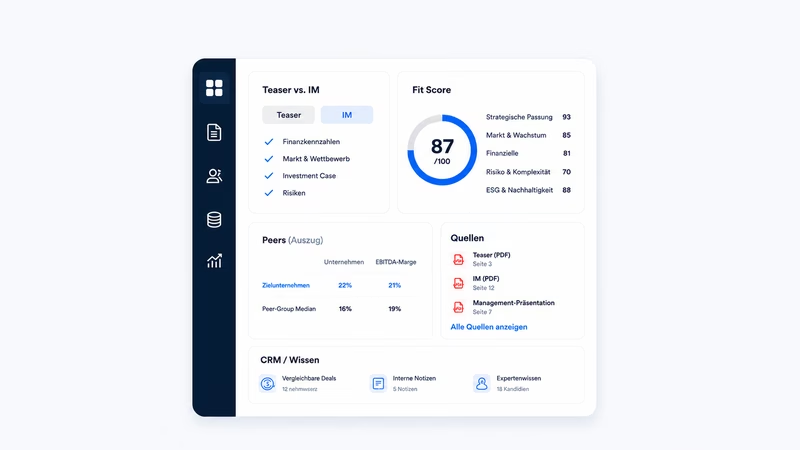
This is where retrieval-augmented generation (RAG) can help. The assistant searches approved sources, then uses relevant passages to draft a response. Answers can still be wrong. Citations let people check the text for themselves.
What is RAG?
A language model may be able to answer general questions. To answer about your processes, contracts or specifications, it needs access to the relevant information and permission to use it.
With RAG, the system searches your approved documents before answering and passes relevant passages to the model. The answer can cite the passages the model used so a reader can verify it.
A RAG system combines two components. A retriever searches the knowledge base for relevant passages. A generator uses those passages to draft an answer. If there is too little evidence, the system can flag the gap or refer the question to a person.
Three places to start
1. Internal knowledge
Make approved handbooks, procedures, onboarding materials and HR policies easier to use. Someone asking about leave entitlement can check the relevant section in the handbook and confirm that it applies to them.
2. Customer support and sales
Bring approved product documentation and common questions into the support workflow. A CRM can provide relevant customer context if the agent has permission to use it. Track handling time and answer accuracy during the pilot.
For COMAN, we brought together help articles, product documentation and a Q&A built from recurring support questions. The assistant can answer product questions inside the software.
3. Regulated industries
For sensitive work in healthcare, finance or legal services, consider where the system runs and which data it can access. Open-weight models such as some Llama releases can run on your infrastructure, subject to their licence and hardware needs. Local hosting still requires a review of data flows, access, logging and applicable privacy rules.
What a RAG project can cost
Allow around 6–12 weeks as an indicative range for a larger pilot. Timing depends on the sources, permissions and integrations. The examples below illustrate how scope changes the budget.
Internal knowledge base covering 1,000–5,000 documents: from €15,000
Customer support integration with CRM: €25,000–€50,000
Fully local deployment: from €40,000
To estimate potential value, suppose 50 people each spend 30 minutes less per day looking for information. At €40 per hour over 220 working days, that is €220,000 in annual staff capacity. Actual savings depend on what the pilot measures, how the team uses the time and what the system costs to operate.
Three challenges to address early
A successful pilot requires reliable sources, a team willing to use it and a scope you can manage.
Source quality. Outdated or conflicting documents can lead to unreliable answers. Inventory the sources, name their owners and agree how to publish and retire versions.
User trust. Bring users into the pilot early. Let them flag errors, verify sources and learn when to ask a person.
Pilot scope. Start with one team and a manageable collection, such as 500–1,000 documents. Test answers and access controls before expanding.
Five steps to your first AI knowledge base
Define one use case. Identify the team and questions that are hardest to answer.
Choose approved sources. Check SharePoint, Google Drive, PDFs or email for relevance and permissions.
Choose where it runs. Compare hosted and local options against data controls, cost and operating requirements.
Test with a small group. Agree measures for retrieval, answer quality and time saved. Evaluate for four to six weeks if the scope calls for it.
Roll out gradually. Keep sources up to date, work through feedback and retest after changes.
Make the knowledge you have easier to find
Start with a specific set of questions and sources that people can verify. A focused pilot shows whether the answers are useful and the permissions hold before you expand.
Our AI knowledge-base service explains how we agree sources and permissions and test answers against real questions.