AI for logistics. Plan more accurately. Use capacity better.
Use AI to forecast demand and plan more efficient routes and stock levels.

Forecast. Plan. Pick.
Demand forecasting
Forecast demand and reduce excess stock and shortages.
- Demand forecasting
- seasonality
- inventory planning
Route planning
Plan routes around traffic, delivery windows and capacity.
- Route planning
- real-time routing
- lower costs
Warehouse and picking
Improve storage locations and pick sequences to reduce turnaround time.
- WMS integration
- slotting
- picking
See demand before it arrives.
Forecast accuracy
Forecast demand from your own data
Use historical data, seasonality and external factors, then measure performance against your current forecasts.
Inventory planning
Less cash tied up. Better availability.
Plan order quantities and safety stock so you can free up capital and keep products available.
External factors
Factor in weather and holidays
Include weather, holidays and market trends to improve demand forecasts.
Shorter routes. Lower costs.
Dynamic routing
Recalculate routes as conditions change
Factor in traffic, delivery windows, vehicle capacity and customer priorities as conditions change.
Utilisation
Reduce empty runs and use more capacity
Combine shipments and make better use of each vehicle to bring down the cost per shipment.
ETA accuracy
Give customers reliable arrival times
Share reliable ETAs with customers. Spot and report delays early.
Pick faster. Store smarter.
Slotting
Put each item in the right place
Use activity and picking patterns to shorten walking routes and pick orders faster.
Picking
Plan better pick sequences
Plan routes and picking sequences to increase picks per hour.
Capacity planning
Forecast staffing needs in the warehouse
Plan enough coverage for busy periods and match staffing to quieter times.
Record delivery notes without rekeying.
The delivery note comes with the shipment, on paper or as a PDF.
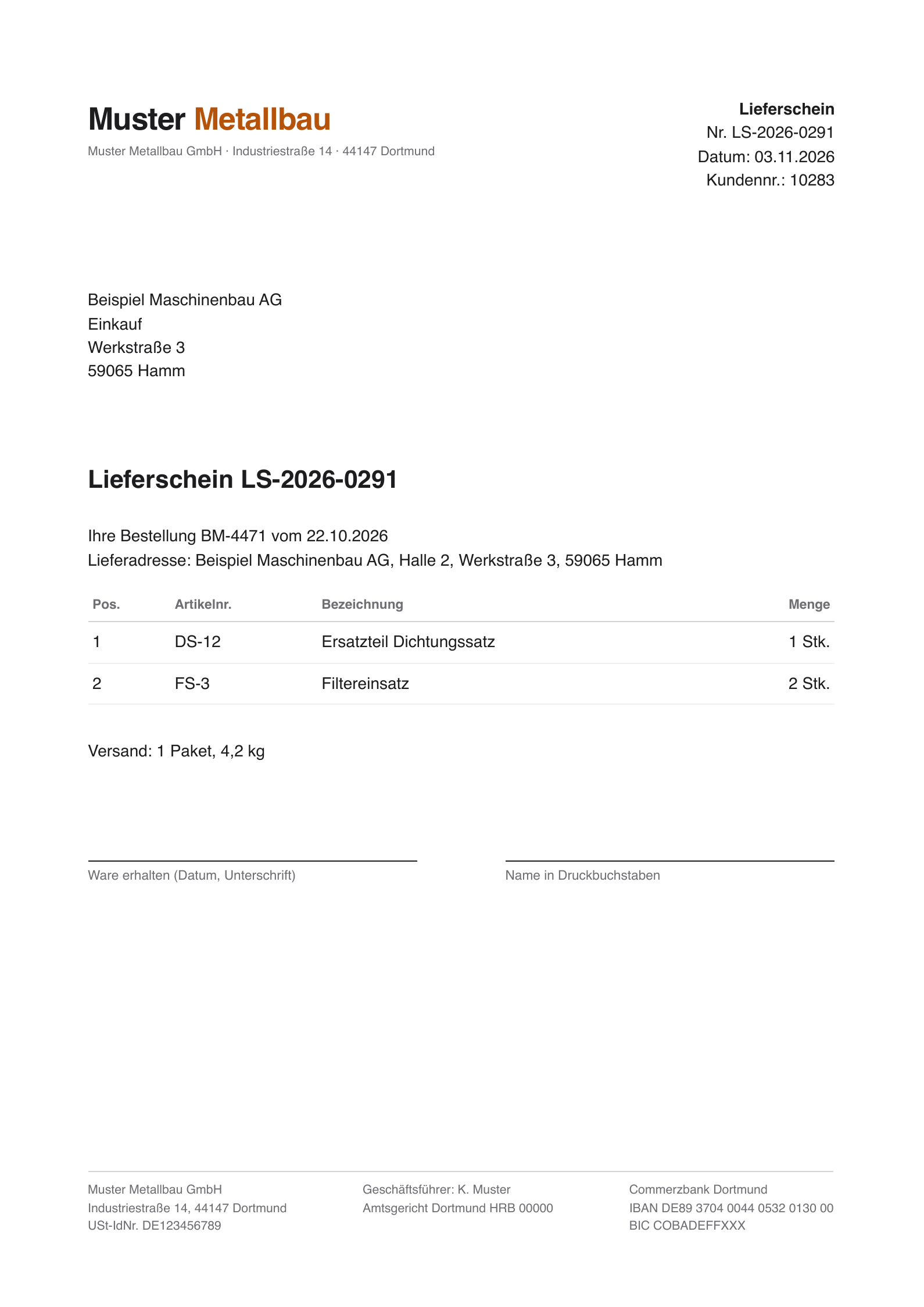
Fictional sample delivery note Capture details including the purchase order number and delivery address.
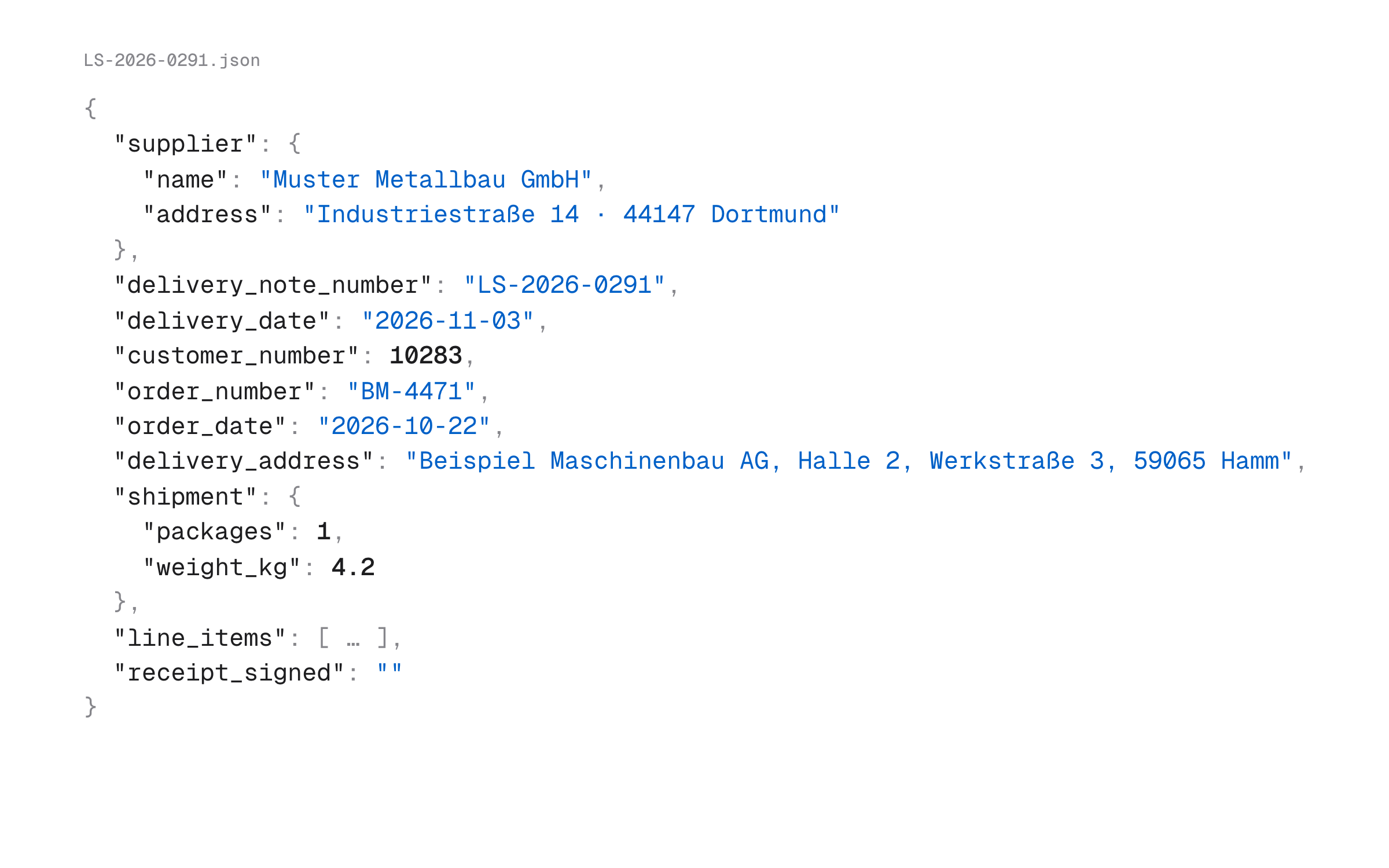
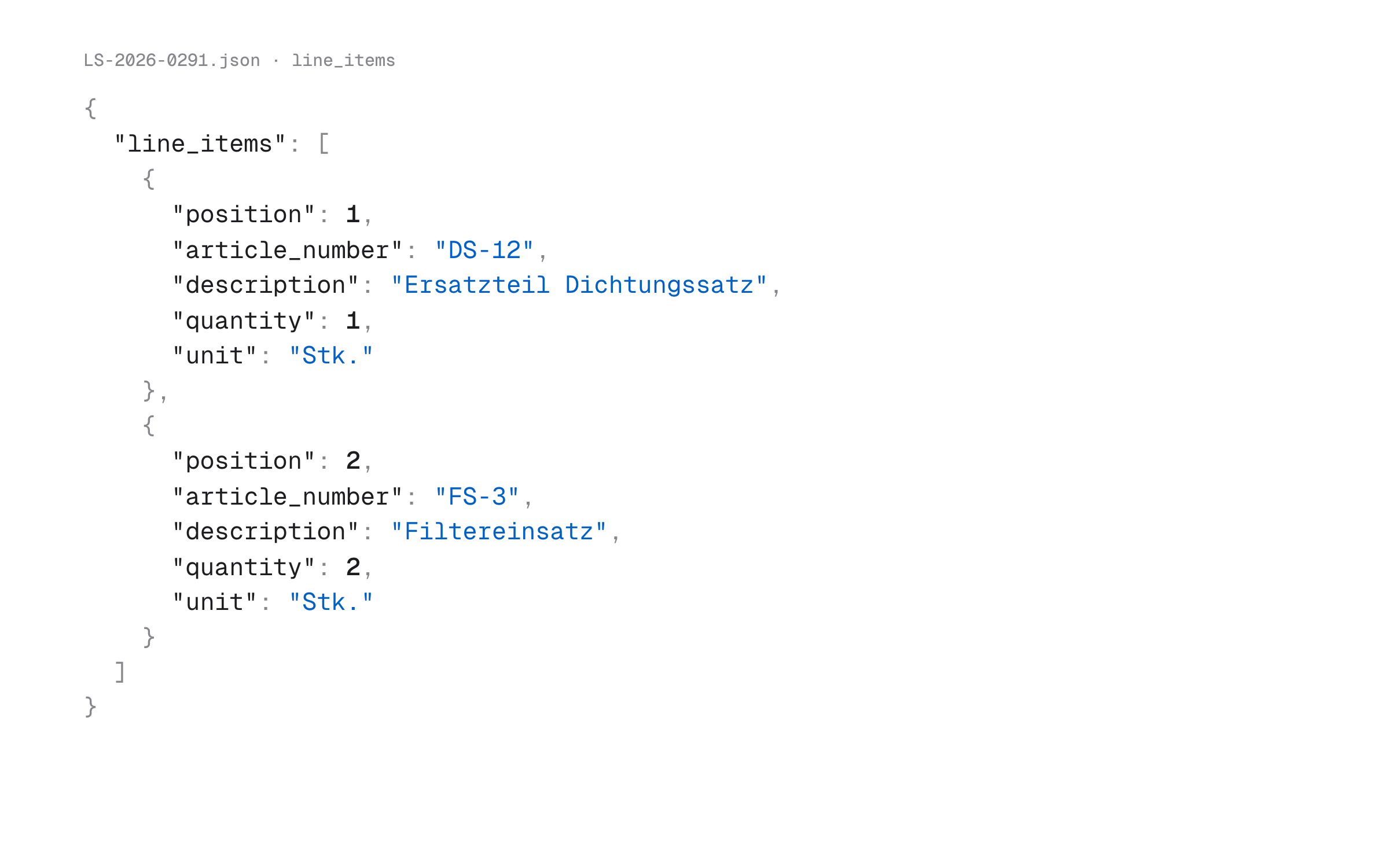
Output from meta/muse-glimmer Capture each line with its item number so it’s ready for goods receipt.
Output from meta/muse-glimmer
Start small. Measure the impact.
- 30 minA free initial consultation.
- 1 pilotSet a clear scope and measure the result before you expand.
- 50%Of eligible advisory costs covered by BAFA in most regions. The rate is 80% in certain regions.
Public funding for your consultation
Eligible SMEs in Germany can apply for BAFA funding. We help you check eligibility, apply and document the costs.
BAFA advisory funding
Grants cover 50% of eligible advisory costs, or 80% in certain regions, on costs up to €3,500.
German state programmes
Some federal states also fund digital and AI projects. We help you find the programmes that fit your project.
Where could AI take work off your logistics team’s hands?
In 30 minutes, we’ll discuss practical opportunities across your supply chain.