:quality(80))
:quality(80))
AI chatbots and AI agents are both artificial intelligence technologies, but they differ fundamentally in their capabilities, use cases, and degree of autonomy:
Criterion | AI Chatbot | AI Agent |
|---|---|---|
Purpose | Natural language communication | Goal-oriented task execution, problem-solving |
Interaction | Primarily text- or voice-based | Interacts with people, systems, and environments |
Autonomy | Limited, responds to queries | High, makes decisions independently |
Focus | User interaction, information delivery | Goal achievement, process optimisation |
Learning ability | Can improve through usage data | Actively learns from experience and adapts |
Complexity | Simple, often rule-based | Can solve complex, dynamic tasks |
Context awareness | Often limited to the current dialogue | Understands and accounts for broader environments |
Examples | Customer service chatbots, virtual assistants | Autonomous robots, multi-agent systems |
AI chatbots are ideal for quick, simple requests such as checking account balances, scheduling appointments, or answering FAQs. They typically operate on predefined rules and are used for routine tasks to free up human resources and boost efficiency.
AI agents, by contrast, are designed to automate complex tasks, make decisions autonomously, and optimise processes. They can act proactively—identifying problems and implementing solutions on their own, without relying on direct human input.
AI Chatbots and AI Agents: How They Work Together
Hybrid systems that combine AI chatbots and AI agents are becoming increasingly common:
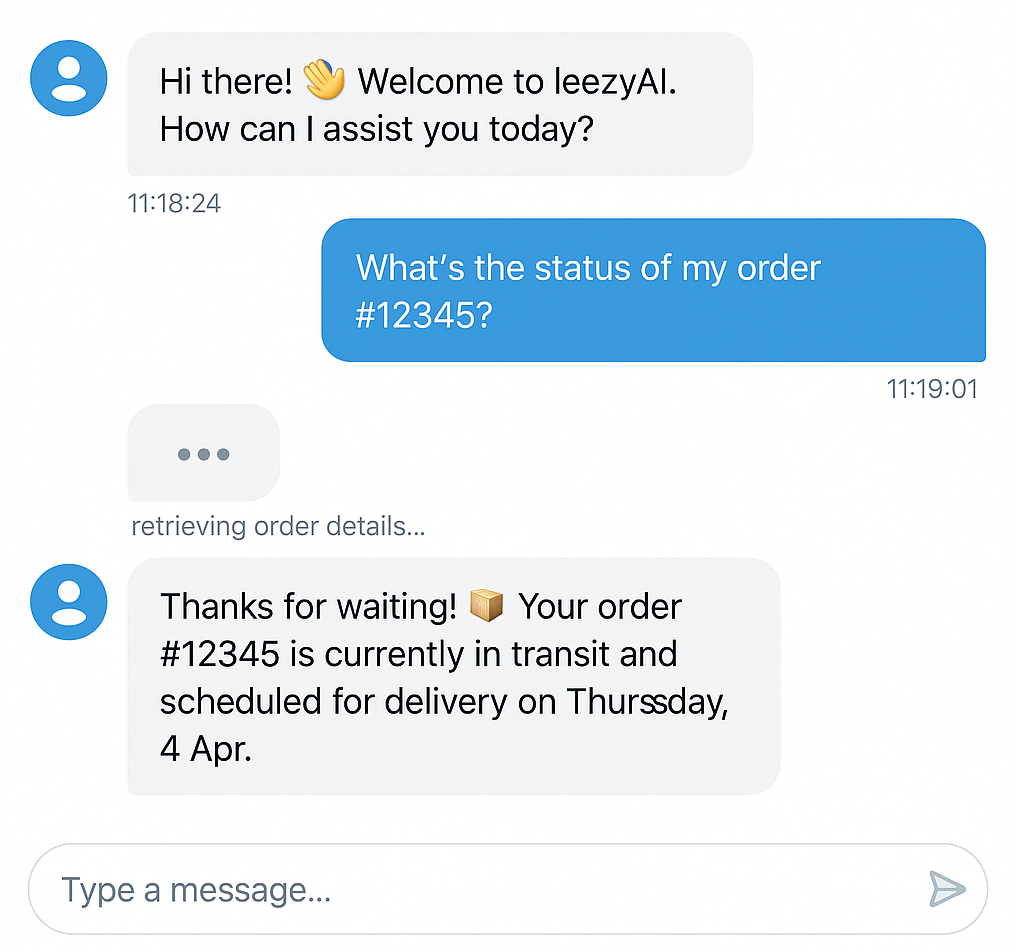
The chatbot handles initial contact, answers simple questions, and escalates more complex issues to an AI agent.
The AI agent analyses the situation, makes decisions, interacts with other systems (e.g. CRM, ERP), and independently executes actions—such as processing an insurance claim or scheduling an appointment automatically.
Multi-agent systems (MAS) take this a step further: multiple specialised AI agents collaborate to tackle particularly complex tasks. Each agent assumes a specific role—for example, sentiment analysis, recommendation engine, or knowledge base. The result is greater efficiency and higher-quality responses.
Technical Implementation
Platforms like n8n enable the creation of custom AI agents and their integration into existing systems and communication channels (web, WhatsApp, Slack, etc.).
Through webhooks and APIs, AI agents can interact with other systems in real time—for example, to respond automatically to events or exchange data.
Security, data quality, and ethical oversight are central considerations in the development and deployment of AI agents, particularly when they operate autonomously.
Conclusion
An AI chatbot with integrated AI agents enables businesses to handle both simple and complex customer enquiries efficiently and automatically. While the chatbot delivers fast, dialogue-based interaction, AI agents take care of the intelligent, autonomous handling of more demanding tasks. Combining both technologies boosts efficiency, improves customer satisfaction, and opens up new possibilities for process automation.
:quality(80))
